
The "Set It and Forget It" Garden Plan for Busy Homeowners
The "Set It and Forget It" Garden Plan for Busy Homeowners

I talk to a lot of homeowners who want a nice yard but are honest about the fact that they don't have time to babysit it. That's a fair place to be. Life is busy. And the good news is you don't actually need to spend hours out there every week to have something that looks great.
This is the approach I'd walk you through if you asked me to help you build something low-maintenance that can handle our coastal North Carolina climate mostly on its own.
Step 1: Start With Plants That Actually Belong Here
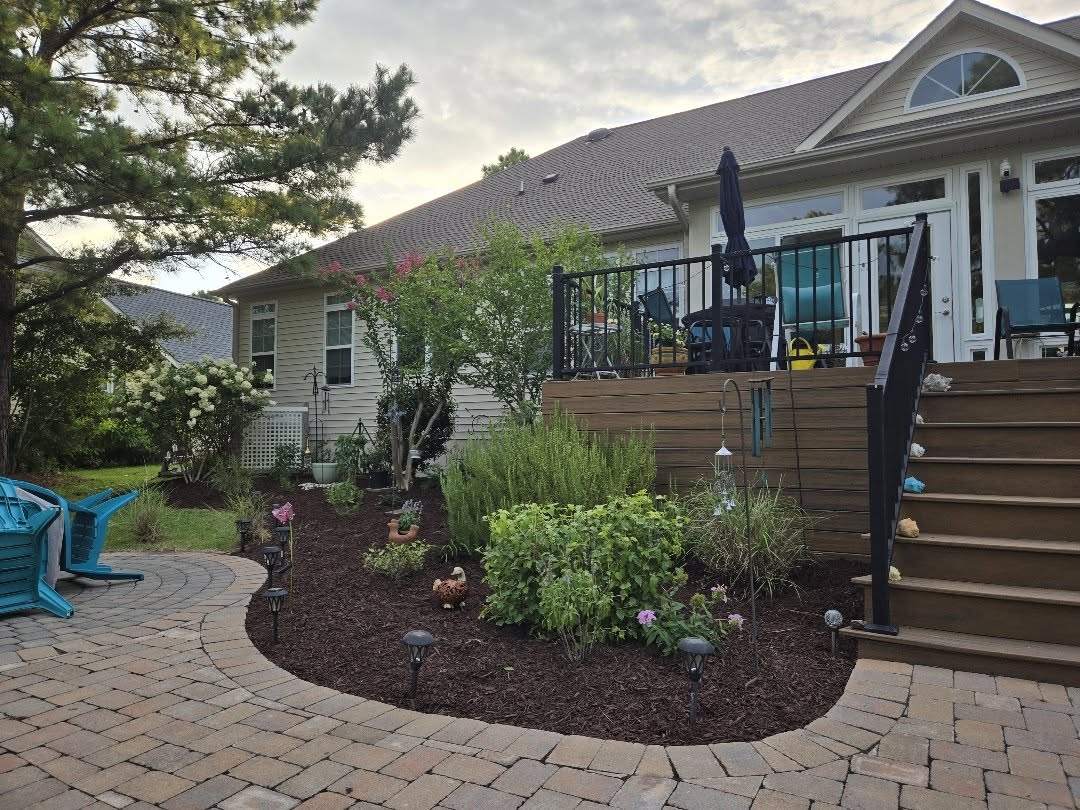
The single biggest mistake I see in local gardens is people planting things that weren't built for this environment and then wondering why they're constantly fighting to keep them alive. Native and climate-adapted plants already know what to do here. They've dealt with our humidity, our sandy soil, our dry stretches. You're not fighting anything.
Some of my go-to picks for New Bern yards: Black-Eyed Susan, Coreopsis, Lantana, Coneflower, Muhly Grass, and Dwarf Yaupon Holly. Heat tolerant, pest resistant, and they don't need you hovering over them.
One more thing: lean heavy on perennials. They come back every year on their own. You plant them once and they handle the rest.
Step 2: Stop Trying to Use Every Plant You Like
I know it's tempting to mix in a bunch of different things, but the cleaner move is to pick three to five varieties and repeat them in clusters throughout the bed. Professional landscapers do this all the time and it's one of the reasons their work looks so intentional.
Something like five Lantana, five Coreopsis, three Muhly Grass, and a few dwarf shrubs repeated in groups gives you a design that looks full and thought-out without turning into a maintenance nightmare. Similar plants grouped together means simpler watering, easier upkeep, and honestly it just looks better.
Step 3: Mulch Is Doing More Work Than You Think
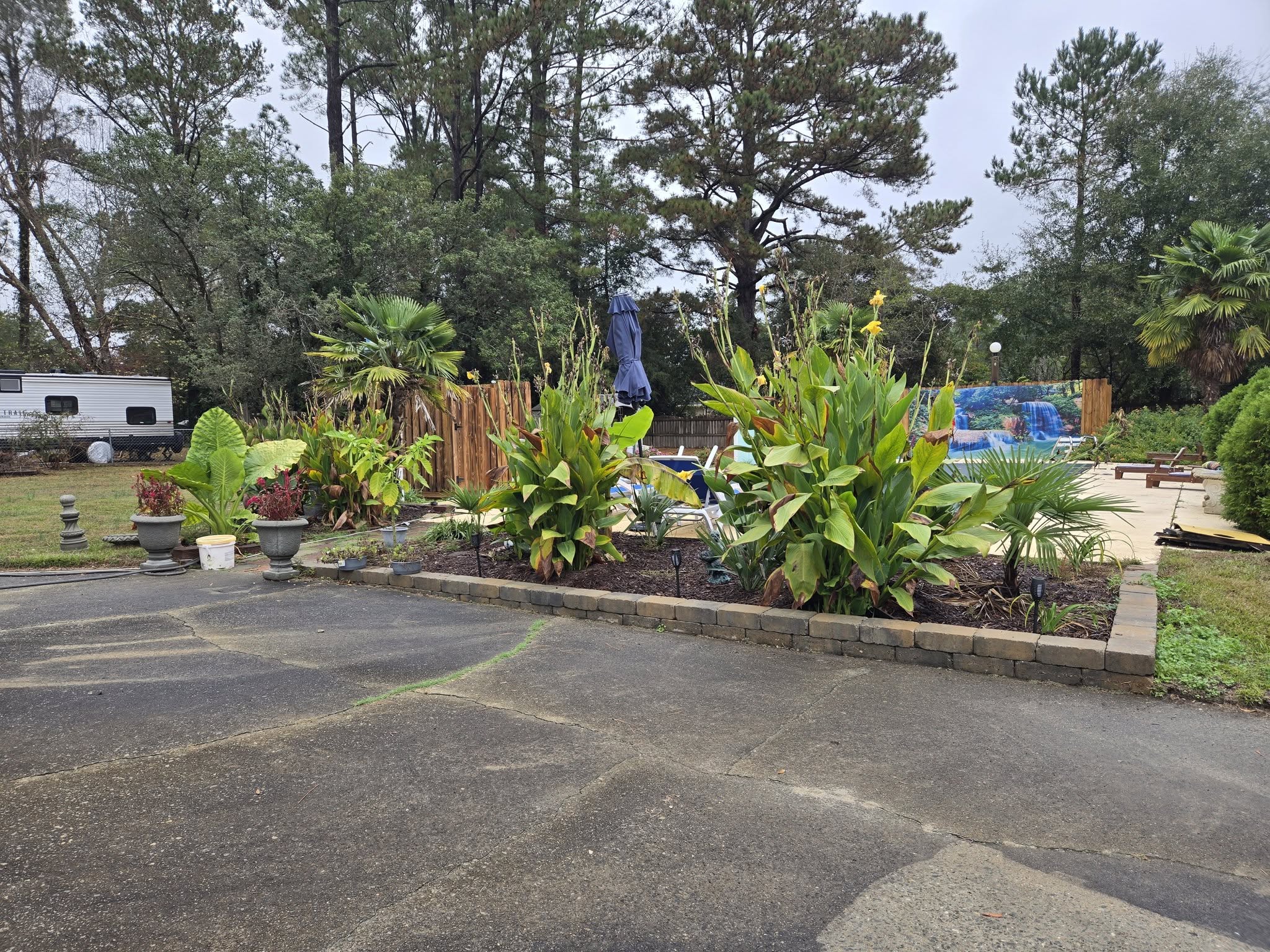
If there's one thing I'd tell every homeowner to do before anything else, it's mulch your beds properly. It blocks weeds, holds moisture, protects roots, and improves your soil health over time. You're basically reducing your future workload every time you put it down.
For our area, hardwood mulch, and pine straw work well. Refresh it once or twice a year and you'll notice a big difference in how much time you're spending out there.
If you want to go a step further, look into living mulch. Instead of wood mulch you're planting low-growing spreaders like creeping thyme, Ajuga, Sedum, dwarf mondo grass, or clover that fill in the gaps and cover the soil themselves. Once they establish they create a green carpet that handles all the same jobs as traditional mulch while adding texture and life to the beds. Works especially well around shrubs and along borders where weeds tend to sneak in.
Step 4: Automate the Watering and Stop Thinking About It
Busy people forget to water. It happens. The fix is to stop relying on yourself to remember and just set up a drip irrigation system or soaker hoses with a basic hose timer. Slow, efficient, low evaporation, and it runs while you're at work or out of town. This is one of those things that feels like a project but takes an afternoon and then you never think about it again.
What Does a Simple Layout Actually Look Like?
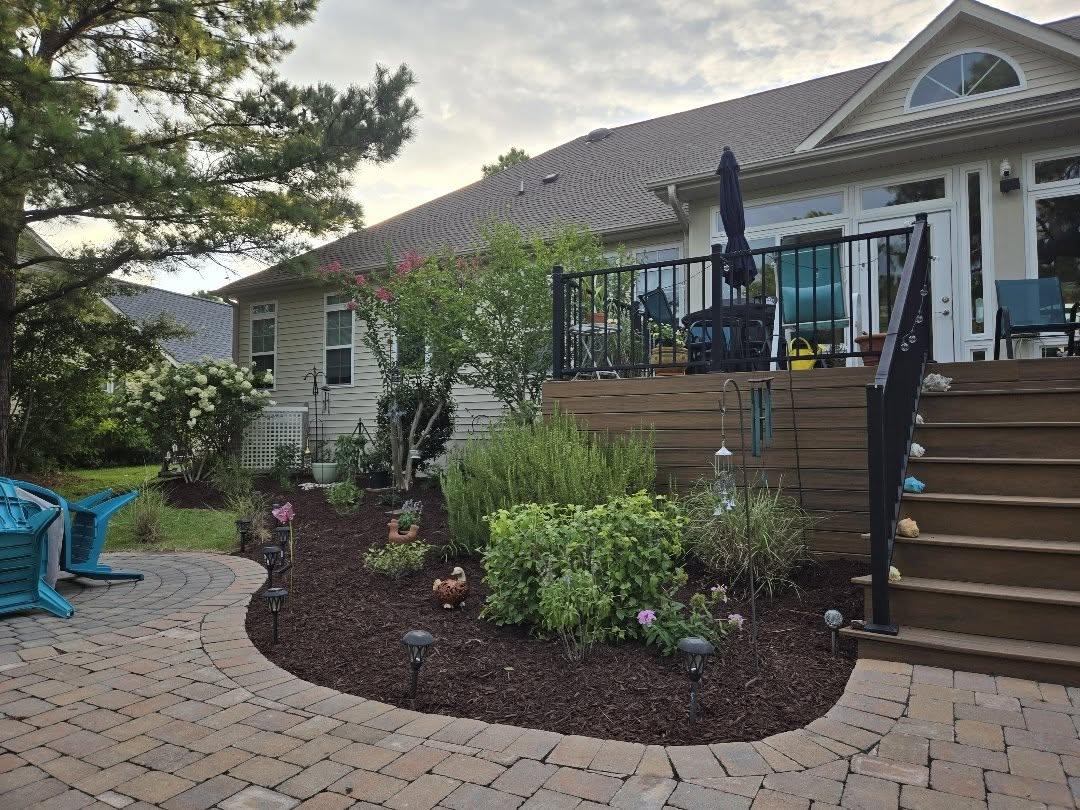
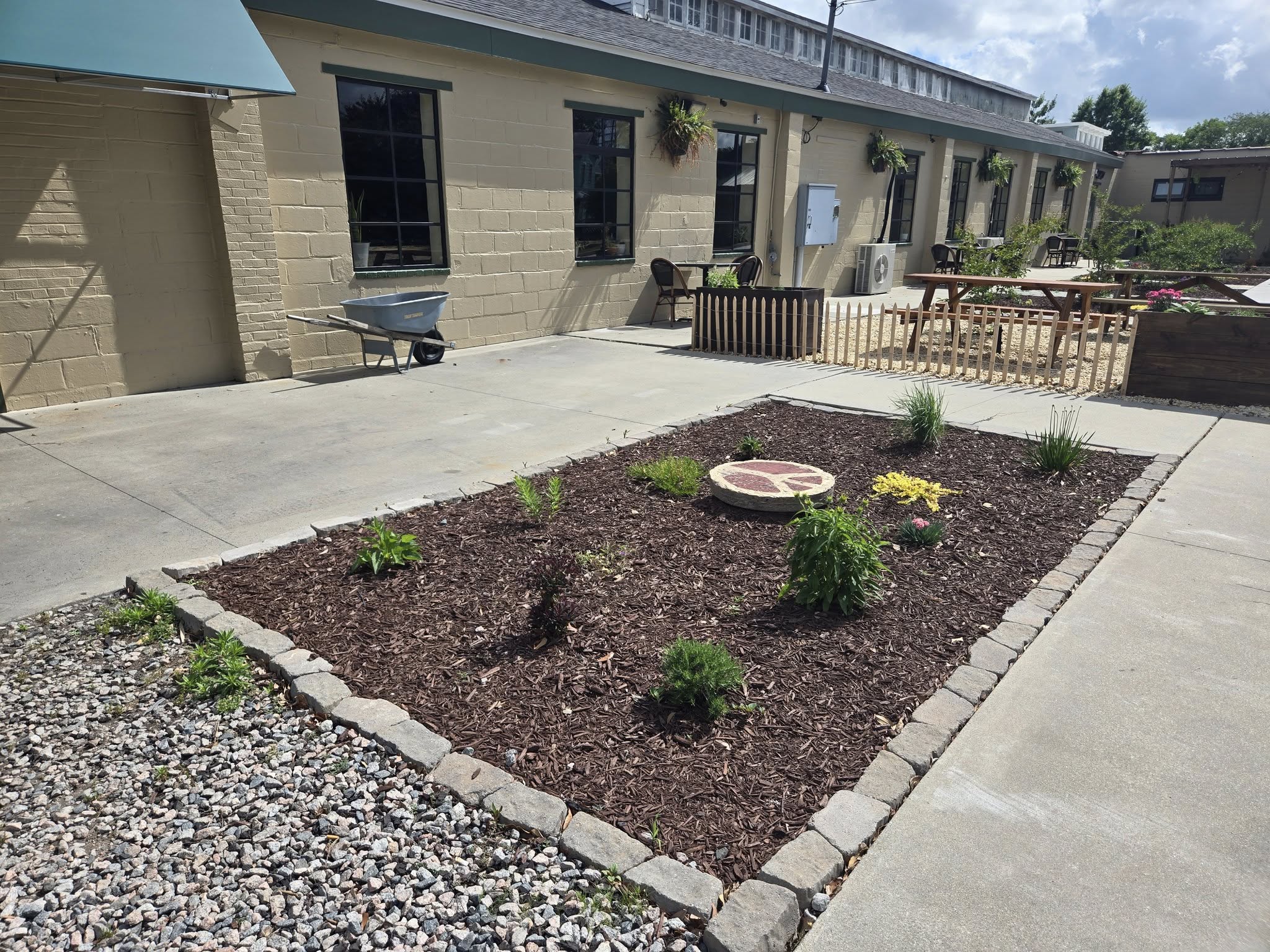
For a standard suburban yard in New Bern, here's a layered setup that works well: Dwarf Yaupon Holly across the back, Muhly Grass and Lantana in the middle, Coreopsis or Black-Eyed Susan up front, and creeping thyme, sedum, or mulch at the ground layer. That's it. It looks full, it's got color, and it takes care of itself most of the year.

How Much Time Are We Actually Talking?
Once everything is established you're looking at watering once or twice a week if you're not automated, very little weeding, pruning once or twice a year, and a mulch refresh annually. Most people land around 30 to 45 minutes a month once it's up and running.
That's the goal. A yard that looks like someone put real thought into it without eating your weekends every time something grows.
If you want help putting something like this together, that's exactly what we do. Start with a conversation about your space and go from there.