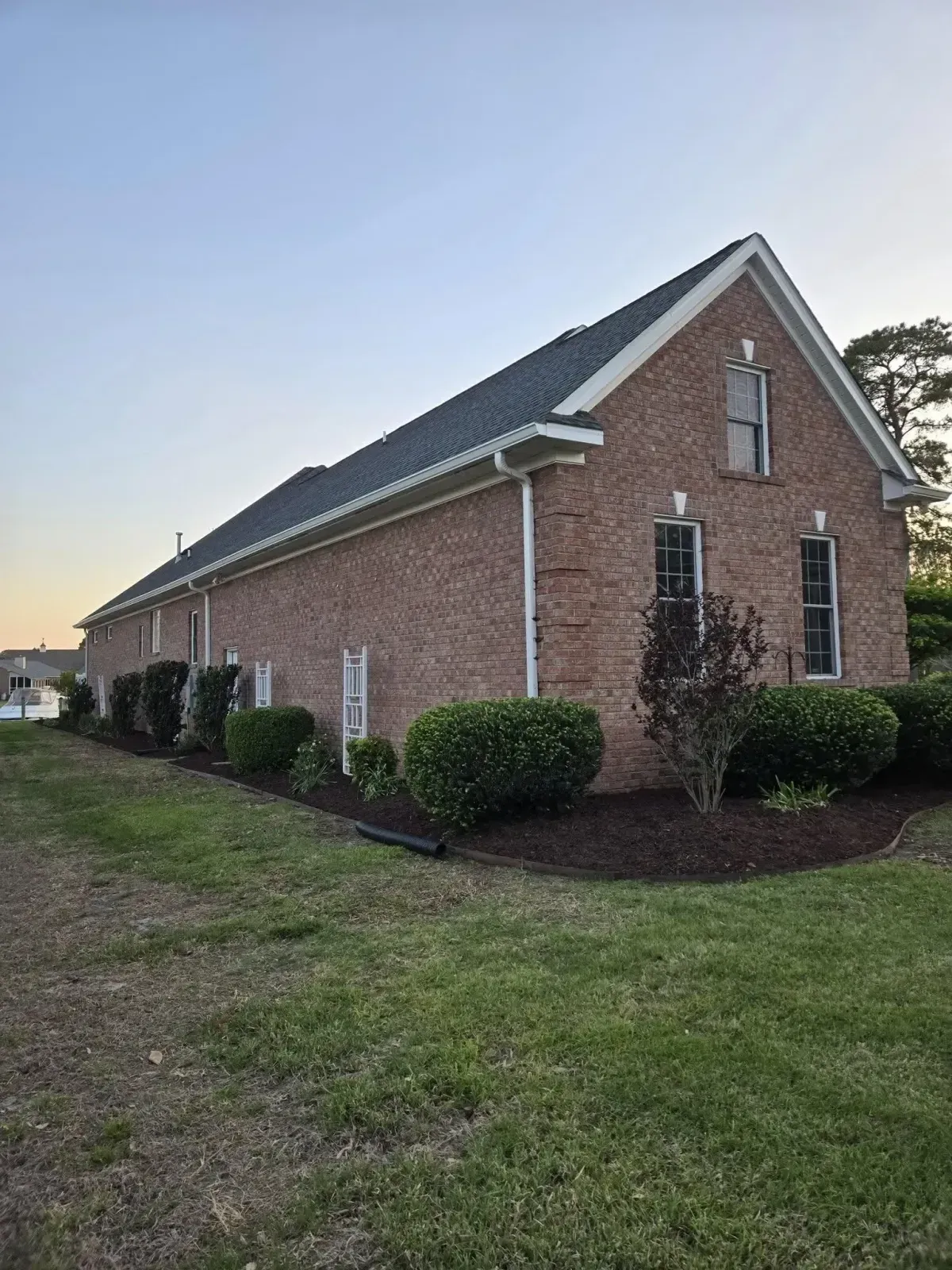
Want a Better Lawn Next Spring? The Work Starts This Fall
Want a Better Lawn Next Spring?
The Work Starts This Fall
Every spring, New Bern homeowners want the same thing: a healthy, green lawn. That's usually
also the first time all year they start thinking about lawn care again.
Here's what I want more people to understand. If you want a better lawn next spring, don't wait
until spring to start on it. Fall and winter aren't the off-season for your lawn, they're part of the
same cycle, and what happens in your soil these next few months sets up what you're looking at
come April.
I take a year-round approach because I'm not trying to make grass look green for a few weeks.
I'm trying to build soil that grows healthier plants on its own.
Your Lawn Doesn't Start at the Grass
Most people look at a lawn and see grass. I look underneath it.
Your lawn runs on roots, soil structure, organic matter, moisture, nutrients, and a whole lot of
microorganisms doing work you never see. That's soil biology. When that system isn't
functioning, you can keep putting products on the grass and keep running into the same
problems year after year: thin turf, weak growth, compacted soil, weeds moving into the bare
spots, water that won't soak in, a lawn that looks decent for a week after treatment and then
slides right back.
So instead of asking what to put on the grass, I'm asking what's happening in the soil. That
question gets you a different answer almost every time.
Fall Lawn Care Isn't One Checklist for Every Yard
Search "fall lawn care" and you'll find the same list everywhere. Fertilize, aerate, seed, spread
this, apply that. Around here, that checklist runs into a problem fast, because it matters what
kind of grass you're actually growing. Eastern North Carolina has both warm-season and
cool-season lawns, and they're not on the same clock.
Take aeration. You've probably heard fall is the best time for it. Sometimes it is. Cool-season
grass, fescue mainly, is actively growing right now, so fall aeration makes sense there.
Warm-season grass, centipede, zoysia, Bermuda, which is most of what I see around here,
does its growing in warmer weather and is heading toward dormancy this time of year. Aerating
it now doesn't line up with what the plant's actually doing. The right treatment at the wrong time
isn't the right treatment, so I look at the lawn before I decide what it gets.
What About Fall Fertilizer?
I get asked this one a lot too, and it makes sense why. For decades homeowners have been
taught to think about lawn care as a fertilizer schedule.
I don't automatically tell every client their lawn needs fertilizer. Plants need nutrients, sure, but
more nutrients doesn't fix compacted soil, low organic matter, or a root zone that can't use
what's already there. So before I reach for fertilizer, I want to know what the soil actually needs
to function better. That's usually a more useful question than "what should I spray on it."
Your Soil Is Still Working Even When the Lawn Looks Quiet
A lot of people assume that if the grass isn't growing fast, nothing's happening. Your soil doesn't
stop being an ecosystem just because it's cold out. Bacteria, fungi, and everything else down
there keep interacting with organic matter, roots, minerals, and water, and a lot of that work runs
on decomposition, not on how fast the grass is growing.
That's the piece I lean on hardest in fall and winter. Right now, on most properties, that means:
Leaf cleanup and mulching, since mulched leaves break down and feed the soil directly.
Compost overdressing, which works on soil biology the same way whether the lawn's dormant
or not. Root-zone care for trees and shrubs, because unlike your lawn, they keep growing roots
well into winter, so fall is actually their best window, not a fallback. Mulching garden beds to
protect roots and feed the soil as it breaks down. And on bare or thin ground, a cover crop to
keep a living root in place through winter instead of leaving that soil idle until spring.
None of that is every treatment for every yard. It's matching the work to what the property
actually needs right now.
Fall Is a Good Time to Ask Why Your Lawn Struggled This Summer
Think back over the last few months. Did parts of the lawn thin out? Did weeds move into the
weak spots? Was there ground that just wouldn't grow well no matter what you did?
Don't let those problems slide just because the grass has slowed down. They're clues. Fall is
when I actually get to dig into why those spots struggled instead of waiting for next spring and
running the same cycle again. A lot of the time, what you saw above ground started below it.
Spring Results Don't Start in Spring
That's the mindset shift I'd like more homeowners here to make. Your lawn is a year-round
system, and different seasons call for different work. When spring finally shows up, I want the
soil already in position for the growing season, not just starting to think about it.
Build Healthy, Not Just Green
I'm not interested in a lawn that needs a quick fix every few weeks to look decent. I'd rather build
soil that supports itself.
I'm a veteran-owned organic lawn and garden care company here in New Bern, and the whole
point is figuring out what your specific property needs, in the season we're actually in, not just
working down a generic checklist.
If your lawn struggled this year, don't wait until spring to find out why. Fall and winter give me the
chance to look at what's going on, focus on the soil, and build a real plan for next season.
Want your lawn in better shape by spring? Contact TrimLawn Organics and let's start
with the soil.