5 Lawn Care Myths New Bern Homeowners Still Believe
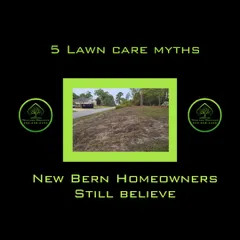
5 Lawn Care Myths New Bern Homeowners Still Believe
If you've lived in New Bern for any length of time, you already know our lawns don't mess
around. Coastal humidity, sandy soil, long growing seasons... it's a lot. And most folks are out
here following advice their dad gave them, or something they saw on a Facebook group, and
wondering why their yard still looks rough.
Some of that advice is flat out wrong. Here are five myths I run into constantly.
Myth #1: Brown Grass Just Needs More Fertilizer
This is probably the most common mistake I see. Lawn looks rough, so the instinct is to dump
fertilizer on it. But over-fertilizing is one of the fastest ways to make things worse. You'll burn the
grass, push roots to stay shallow, and basically roll out a welcome mat for weeds and pests.
Most of the time when I see a struggling New Bern lawn, the problem isn't that it's starving. It's
that the soil biology is off. Healthy soil feeds the grass. That's what we're always working
toward.
Myth #2: Watering Every Day Is Good for Your Lawn
Makes sense on the surface, but daily shallow watering actually trains your grass to be lazy.
Roots stay near the top because that's where the water is. Then when a dry stretch hits, the
lawn fries.
What you want is deep, infrequent watering. Let the soil dry a bit between waterings so roots
have to reach for it. Twice a week, done right, beats every single day every time. Especially out
here where summer doesn't take breaks.
Myth #3: All Weeds Are the Enemy
I get it, weeds are annoying. But I actually pay attention to what weeds show up in a yard
because they're telling you something. Clover usually means a nitrogen imbalance. Dandelions
love compacted soil. Crabgrass moves in when the lawn is thin and stressed.
Spraying them and calling it a day doesn't fix anything. You'll be spraying again in six weeks.
We'd rather figure out why they showed up and fix that instead.
Myth #4: Chemical Treatments Work Better
They work faster. That's not the same thing. Chemical programs can green a lawn up quick, but
a lot of them are quietly degrading the soil underneath while they do it. You end up needing
more product every year just to maintain the same look.
Organic takes longer to show results, I'll be upfront about that. But what you're building is a lawn
that gets stronger over time instead of more dependent. There's a big difference.
Myth #5: Cut It Short So You Mow Less
I understand the logic. But scalping your lawn is rough on the plant. It stresses the grass, bakes
the soil, and opens up space for weeds to move in. Not the outcome anyone's going for.
Most warm-season grasses we deal with in coastal NC actually do better a little on the taller
side. Taller blades shade the soil, hold in moisture, and crowd out weeds naturally. Mow a little
more often and leave it a bit taller. Your lawn will thank you.
So What Do Healthy New Bern Lawns Actually Have in Common?
Healthy soil. That's it. When the biology underground is working the way it should, the grass
above it takes care of itself a lot more than people expect. Thicker, greener, more resilient, less
inputs over time.
That's what we're always chasing at TrimLawn Organics. Not a lawn that looks good for two
weeks. One that actually gets better every season.
If you're not sure where your lawn stands, a soil test is the best place to start. It takes the
guesswork out of everything. Reach out and we'll take a look.